
Understanding Transformer Requirements in Haryana
Haryana has a wide range of industrial activities, including manufacturing plants, automobile component units, engineering workshops, food processing facilities, warehouses, commercial buildings, and production units. These facilities depend on a stable electrical supply to operate machinery, maintain production schedules, and protect sensitive electrical equipment. Selecting a reliable Transformer Manufacturer in Haryana is therefore an important step when planning a new industrial installation or upgrading an existing power distribution system.
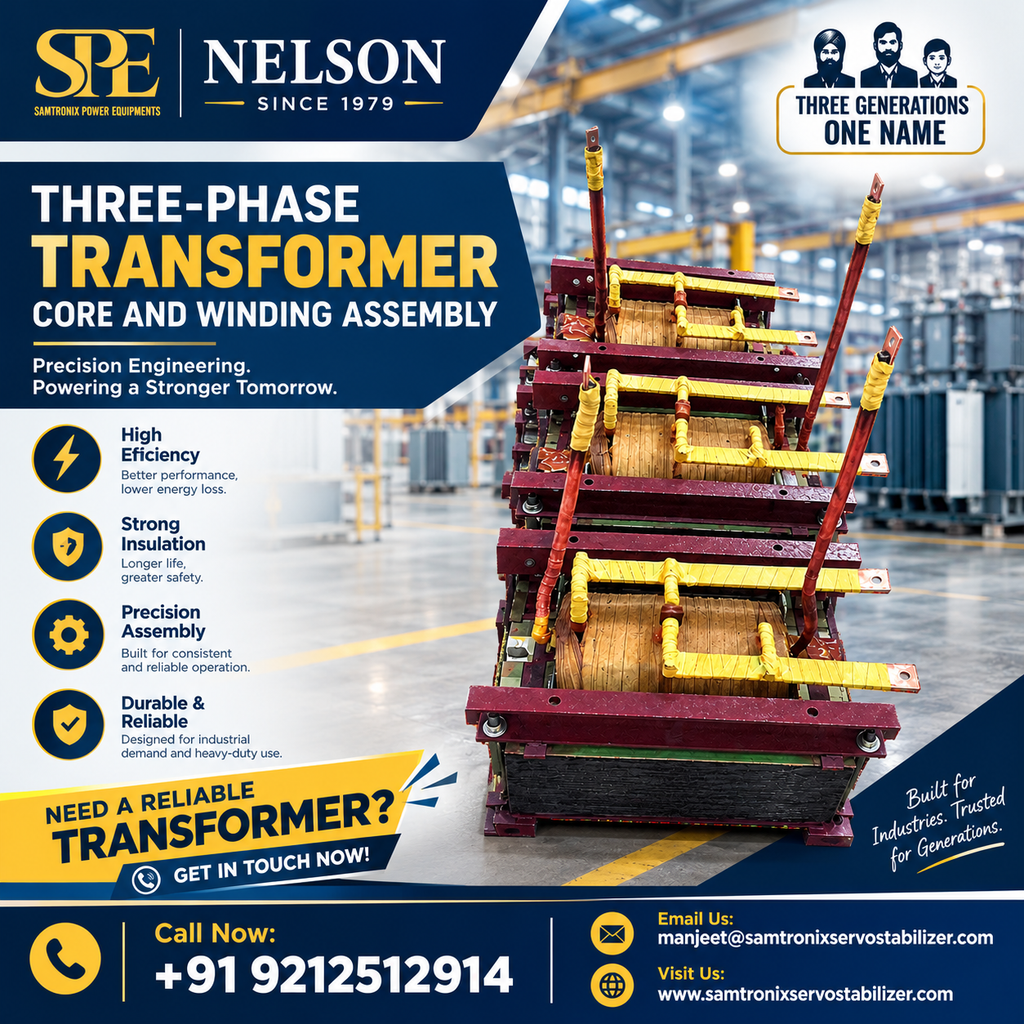
A transformer helps transfer electrical energy between circuits by changing voltage levels according to the requirements of an installation. The correct transformer supports suitable voltage distribution, helps electrical equipment operate within its designed limits, and contributes to dependable power management. However, every facility has different electrical loads, operating hours, environmental conditions, and installation requirements.
Samtronix Power Equipments provides industrial electrical equipment solutions for businesses requiring dependable power management. As a Transformer Manufacturer in Haryana, the focus is on understanding the intended application, electrical load requirements, installation conditions, and operational needs before selecting a suitable transformer configuration.
Industrial buyers should consider the equipment connected to the transformer, the expected expansion of the facility, the nature of the electrical supply, and the conditions in which the unit will operate. A transformer designed around actual operating requirements can support consistent performance during regular production and periods of heavy electrical demand.
How a Transformer Supports Industrial Operations
Transformer Manufacturer in Haryana play an important role in electrical distribution systems. Manufacturing plants often receive electricity at a particular voltage level and require a different voltage for internal distribution or specific equipment. A transformer helps make this conversion possible while maintaining the electrical isolation and configuration required by its design.
A dependable Transformer Manufacturer in Haryana understands that transformer selection is not limited to the required output voltage. The connected load, starting current, duty cycle, installation environment, cooling arrangement, and protection system also affect the suitability of the equipment.
For example, a factory operating several production machines simultaneously may experience a different load pattern from a warehouse with lighting, ventilation, and a few material-handling systems. Similarly, equipment that operates continuously for 16 to 24 hours requires careful consideration of thermal performance and maintenance access.
Transformers are used in industrial power distribution, electrical panels, production lines, commercial facilities, and specialised installations. The design must correspond to the electrical characteristics of the application rather than relying on a general specification.
Samtronix Power Equipments assists businesses looking for transformer-related solutions for industrial power requirements. When approaching a Transformer Manufacturer in Haryana, buyers should share the available supply voltage, required secondary voltage, connected load details, and any known issues with their existing electrical system.
Types of Transformers for Different Industrial Requirements
Different applications require different transformer designs. The appropriate selection depends on voltage requirements, the installation environment, the load profile, and the intended function of the electrical system.
| Transformer type | Typical application | Important consideration |
|---|---|---|
| Three-phase transformer | Industrial plants and production facilities | Three-phase load and voltage requirements |
| Dry-type transformer | Indoor installations and selected commercial or industrial areas | Ventilation, insulation, and ambient temperature |
| Oil-cooled transformer | Industrial power distribution and suitable outdoor installations | Oil condition, cooling, and leak inspection |
| Isolation transformer | Sensitive equipment and electrical isolation applications | Isolation requirements and earthing arrangement |
| Special-purpose transformer | Equipment with specific electrical requirements | Application-specific design and operating conditions |
A professional Transformer Manufacturer in Haryana should establish the intended use before recommending a particular configuration. For example, a transformer serving an indoor electrical room may require a different installation arrangement from one positioned outdoors in a dusty industrial environment.
The cooling system is also important. Dry-type and oil-cooled transformers have different construction and maintenance requirements. The choice should account for available space, ventilation, environmental conditions, fire-safety requirements, and applicable electrical standards.
Samtronix Power Equipments supports industrial enquiries involving transformer applications and related electrical equipment. Sharing accurate technical information helps determine the configuration that fits the intended installation.
Three-Phase Transformers for Heavy Loads
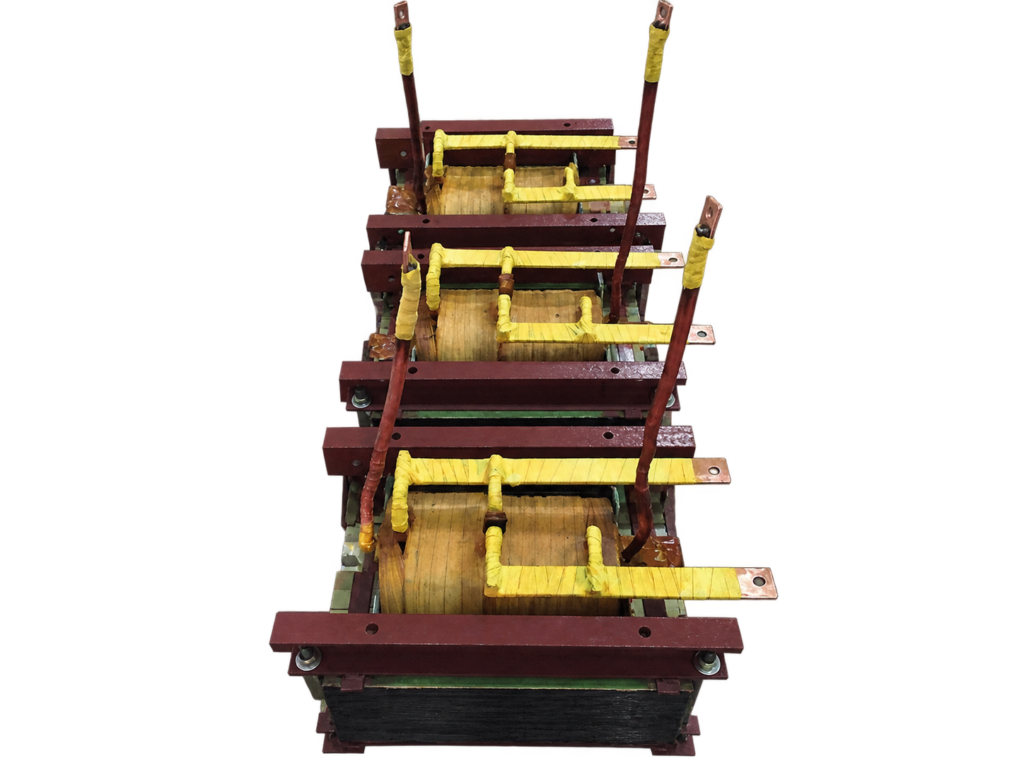
Three-phase transformers are widely used in factories because industrial equipment frequently operates on three-phase electrical supplies. These installations may include compressors, pumps, machine tools, conveyors, industrial ovens, processing equipment, and other heavy electrical loads.
A Transformer Manufacturer in Haryana must consider both the total connected load and the way that load behaves during operation. A machine drawing a relatively steady current creates different operating conditions from a motor that demands a high starting current or equipment that switches on and off frequently.
Heavy loads require particular attention to transformer capacity, temperature rise, voltage regulation, protection devices, and the expected duration of peak demand. If several large motors start at the same time, the resulting current demand may affect voltage stability. The transformer and associated electrical system should be assessed for these operating conditions.
For example, a production facility with a 100 kVA transformer should not automatically assume that the entire nameplate capacity is available for every combination of equipment under all conditions. The actual usable capacity depends on the load characteristics, power factor, ambient temperature, harmonics, cooling conditions, and applicable design limits.
A Transformer Manufacturer in Haryana can assess the connected equipment schedule and operating pattern to help identify the appropriate transformer rating. Where the plant expects future expansion, additional capacity may need to be considered during the initial planning stage.
Samtronix Power Equipments caters to industrial electrical equipment enquiries where reliable power distribution and suitable transformer selection are essential. Customers should provide motor ratings, operating schedules, and details of equipment that creates sudden or repetitive load changes.
Three-Phase Transformer Core and Winding Assembly
The core and winding assembly is a central part of transformer construction. The magnetic core provides a path for magnetic flux, while the windings transfer electrical energy between the primary and secondary circuits through electromagnetic induction.
A Three Phase Transformer Core and Winding Assembly must be manufactured and assembled with attention to winding dimensions, insulation placement, conductor connections, mechanical support, and the required electrical clearances. The design and assembly process directly influence the transformer’s ability to operate within its specified electrical and thermal limits.
During manufacturing, the core structure must be assembled correctly to support the intended magnetic performance. Winding placement and insulation arrangements must follow the approved design. Improper connections, damaged insulation, inadequate clearances, or loose mechanical components can lead to overheating, abnormal noise, electrical faults, or premature equipment failure.
A Transformer Manufacturer in Haryana should ensure that the assembly process follows appropriate manufacturing procedures and inspection requirements. Relevant checks may include winding resistance measurements, insulation resistance tests, turns-ratio verification, polarity or vector-group verification where applicable, and other routine tests specified for the transformer.
For industrial buyers, understanding the assembly process helps when evaluating equipment for a new installation. Samtronix Power Equipments can be approached for enquiries involving transformer applications and assembly-related requirements.
Why Voltage Stability Matters Alongside Transformer Capacity
A Transformer Manufacturer in Haryana provides voltage conversion, but it does not automatically correct every voltage fluctuation occurring in the electrical supply. Facilities experiencing frequent under-voltage or over-voltage conditions may require a separate voltage regulation solution after the electrical system has been assessed.
This is where a servo stabilizer or servo voltage stabilizer may become relevant. A servo controlled voltage stabilizer adjusts its output voltage to help maintain a suitable supply within its specified input and output operating range.
For factories using CNC machines, production equipment, control panels, testing instruments, and automated systems, unstable voltage can interrupt operations or cause equipment to operate outside its recommended electrical limits. The appropriate solution depends on the source of the disturbance and the equipment’s tolerance.
A Transformer Manufacturer in Haryana can help determine the transformer requirements, while a separate voltage regulation assessment can establish whether a stabilizer is also needed. Transformer capacity, stabilizer capacity, load characteristics, and protection coordination should be evaluated together.
| Electrical issue | Possible effect | Area to investigate |
|---|---|---|
| Frequent low voltage | Motor performance problems or equipment interruptions | Incoming supply and load demand |
| High voltage | Equipment operating outside its permitted range | Supply variation and regulation requirements |
| Sudden motor starting | Temporary voltage dips | Starting current and system impedance |
| Uneven phase loading | Phase-voltage imbalance | Load distribution and connections |
| Excessive heating | Insulation deterioration or unexpected shutdowns | Overloading, cooling, harmonics, and connections |
Samtronix Power Equipments offers industrial power equipment solutions for businesses evaluating transformer and voltage stabilisation requirements. The objective is to identify the electrical problem correctly instead of assuming that replacing the transformer alone will resolve every supply issue.
Transformer and Servo Stabilizer Requirements for Factories
Industrial plants often use transformers and voltage stabilizers for different purposes within the same electrical installation. A transformer changes voltage levels or provides isolation according to its design, while a stabilizer regulates voltage within its rated operating range.
An Industrial Three Phase Servo Stabilizer Manufacturer should assess the connected load, input voltage variation, required output voltage, and motor starting characteristics before recommending a stabilizer. This is particularly important for facilities with heavy machinery or equipment that operates throughout the working day.
A Three Phase Servo Voltage Stabilizer for Industries may be relevant when the incoming supply experiences variations that exceed the tolerance of connected equipment. Applications can include manufacturing lines, packaging machinery, CNC equipment, printing systems, and industrial control panels.
Businesses looking for a Three Phase Servo Stabilizer Supplier in India should provide the connected load details and the lowest and highest observed input voltage, where these measurements are available. This information helps establish the required regulation range and capacity.
Samtronix Power Equipments also serves enquiries associated with servo stabilizer manufacturers, a servo voltage stabilizer manufacturer, and an Automatic Three Phase Voltage Stabilizer Manufacturer for industrial power management requirements.
When the electrical problem involves both voltage conversion and unstable incoming voltage, the complete system should be assessed by a qualified electrical professional. Correct coordination helps prevent unsuitable equipment selection and supports dependable operation.
Choosing the Right Transformer Capacity
Transformer capacity should be selected using actual electrical demand rather than the number of machines alone. Each item of equipment contributes to the total load, but its starting characteristics, operating schedule, and power factor can affect the final requirement.
A Transformer Manufacturer in Haryana should review the current load and any expected expansion before confirming the transformer specification. The electrical assessment should include equipment ratings, the number of simultaneously operating machines, future production plans, and site conditions.
The following examples illustrate common capacity categories and possible application types. They are indicative examples only, not a recommendation for a particular facility.
| Illustrative capacity | Possible application | Information needed before selection |
|---|---|---|
| 25 kVA | Small workshop or limited industrial loads | Actual demand and equipment starting current |
| 63 kVA | Small production unit | Simultaneous load and operating schedule |
| 100 kVA | Medium-sized workshop or selected production systems | Load profile and expansion plans |
| 250 kVA | Larger production installation | Motor loads, power factor, and peak demand |
| 500 kVA | Heavy industrial distribution | Detailed load assessment and protection design |
| 1000 kVA and above | Large industrial facilities | Engineering study, site conditions, and system configuration |
These ratings should not be treated as fixed application rules. Two factories with similar equipment counts may have very different power requirements. A facility operating multiple motors continuously can have a different demand profile from a unit where machines operate in separate shifts.
A suitable Transformer Manufacturer in Haryana should also consider whether the transformer must supply nonlinear loads, equipment with frequent starts, or systems that generate harmonics. These characteristics can affect heating and the required design provisions.
Important Installation Factors for Transformer Performance
Correct installation is essential for reliable transformer operation. Even a properly manufactured transformer can experience problems if it is installed in an unsuitable location or connected incorrectly.
The installation area should provide sufficient access for inspection, maintenance, ventilation, and safe operation. Dry-type transformers require suitable airflow and environmental protection. Oil-cooled units require attention to oil containment, leakage inspection, cooling surfaces, and the applicable site-safety requirements.
A Transformer Manufacturer in Haryana should clarify the installation conditions needed for the selected equipment. Buyers should communicate whether the transformer will be installed indoors or outdoors, the available floor space, expected ambient temperatures, dust exposure, and any restrictions affecting maintenance access.
Electrical connections must be made according to the approved drawings and nameplate information. Earthing, cable sizing, protective devices, phase sequence, and isolation arrangements should be verified by qualified personnel before energisation.
For example, loose terminals can produce localised heating even when the total load appears to be within the rated capacity. Similarly, blocked ventilation openings can contribute to excessive temperature rise. These issues can often be addressed through appropriate installation practices and scheduled inspection.
Samtronix Power Equipments encourages customers to share their installation details during the enquiry stage so the equipment requirements can be assessed more accurately.
Routine Transformer Maintenance and Troubleshooting
Regular maintenance helps identify developing problems before they cause an unexpected shutdown. The maintenance schedule should follow the manufacturer’s instructions, the applicable electrical standards, and the operating conditions of the installation.
A Transformer Manufacturer in Haryana should provide relevant technical documentation and maintenance guidance for the selected transformer. The maintenance plan may include visual inspection, checking for abnormal noise or vibration, examining cable connections, monitoring temperature, and inspecting cooling arrangements.
Oil-cooled Transformer Manufacturer in Haryana may require oil-related inspections or testing according to the equipment design and maintenance schedule. Dry-type transformers may require cleaning, inspection of insulation surfaces, and verification that ventilation paths remain unobstructed.
Unexpected overheating should not be treated as a normal operating condition. The investigation should consider overload, loose connections, inadequate cooling, phase imbalance, harmonics, and possible insulation deterioration.
If a Transformer Manufacturer in Haryana begins producing unusual noise, develops a burning smell, shows visible leakage, or repeatedly trips protective devices, the equipment should be assessed by qualified electrical personnel. Repeatedly resetting protection without identifying the cause can expose the installation to further damage.
The following table outlines common symptoms and the checks that may help identify their cause.
| Observed symptom | Possible cause | Recommended action |
|---|---|---|
| Excessive temperature | Overloading or restricted cooling | Verify load and cooling conditions |
| Unusual humming | Loose components or abnormal electrical conditions | Arrange an authorised inspection |
| Output voltage fluctuation | Supply variation or changing load | Measure input and output voltage |
| Repeated protective trips | Fault, overload, or incorrect protection coordination | Investigate before restarting |
| Uneven phase voltage | Unbalanced loads or connection issues | Check phase voltages and load distribution |
For Transformer Manufacturer in Haryana installations, preventive maintenance should be documented. Recording temperatures, operating loads, test results, and recurring faults helps maintenance teams identify changes in transformer performance over time.
Samtronix Power Equipments for Industrial Transformer Enquiries
Samtronix Power Equipments works with businesses seeking electrical power equipment for manufacturing, industrial processing, and commercial applications. Customers looking for a Transformer Manufacturer in Haryana can discuss their required voltage, transformer capacity, installation arrangement, cooling preference, and intended application.
The enquiry process should begin with a clear understanding of the electrical requirement. If the customer is replacing an existing transformer, the available nameplate details, previous test reports, and records of recurring faults can help clarify the specification. For a new installation, the load schedule and electrical design documents are useful starting points.
Samtronix Power Equipments also handles enquiries related to voltage stabilisation equipment. Customers searching for a Three Phase Servo Voltage Stabilizer Company, a Three Phase Servo Stabilizer for Factories, or an Industrial Voltage Stabilizer Company in India should describe the actual supply problem and the equipment that needs protection.
A servo stabilizer price enquiry should include the required capacity, phase configuration, input-voltage range, output-voltage requirement, and load type. These technical details help establish what equipment is appropriate for the application.
Similarly, customers looking for a Transformer Manufacturer in Haryana or a Three Phase Transformer Assembly Manufacturer in Delhi can share their project location and technical requirements to discuss the relevant manufacturing and supply arrangements.
The right starting point is a clear technical enquiry. Samtronix Power Equipments can then assess the information provided and help identify the equipment requirements for the intended installation.
FAQs | Transformer Manufacturer in Haryana
1. How do I select a Transformer Manufacturer in Haryana for my factory?
Share the load schedule, required voltage, phase configuration, installation conditions, and expected future expansion. These details help establish the correct specification.
2. What information is needed to select a transformer for heavy loads?
Provide equipment ratings, motor starting details, simultaneous demand, operating hours, and power factor information where available.
3. Can a transformer correct frequent voltage fluctuations?
Not necessarily. A transformer changes voltage according to its design. A separate servo voltage stabilizer may be required if the incoming supply varies beyond equipment tolerance.
4. When should a factory consider a three-phase transformer?
A three-phase transformer is commonly used when the facility requires three-phase power distribution for industrial machinery and production equipment.
5. What causes a transformer to overheat under normal load?
Possible causes include restricted cooling, loose connections, harmonics, phase imbalance, or internal faults. A qualified technician should investigate the cause.
6. Which tests should be checked before commissioning a transformer?
Depending on the design and applicable requirements, checks may include insulation resistance, winding resistance, turns ratio, connection verification, and specified routine tests.
7. Can Samtronix Power Equipments assist with transformer and stabilizer requirements?
Yes. Contact Samtronix Power Equipments with the electrical load details, voltage requirements, installation location, and intended application to discuss your requirements.
Connect with Samtronix on LinkedIn for Industrial Power Expertise.