
Reliable Transformer Solutions for Industrial Power Requirements
Electrical power is an important part of every industrial operation. Manufacturing units, production plants, commercial buildings, workshops and heavy engineering facilities depend on a stable electrical supply to keep their machines running properly. When voltage conditions are unsuitable or the electrical system is not designed according to the connected load, equipment may experience overheating, unexpected shutdowns and interruptions in production. Choosing the right transformer is therefore an important decision for any business.
As a Three Phase Transformer Manufacturer in Delhi, Samtronix Power Equipments focuses on transformer solutions for industrial and commercial electrical applications. Our approach is based on understanding the customer’s power requirements, connected equipment, operating conditions and installation needs before recommending a suitable transformer assembly.
A three-phase transformer is commonly used in electrical systems where power must be transferred between circuits at different voltage levels. It can support industrial distribution systems, manufacturing equipment, commercial installations and other applications that require three-phase power. Selecting the right design helps businesses plan their electrical infrastructure according to actual operating requirements.
Understanding Three Phase Transformers
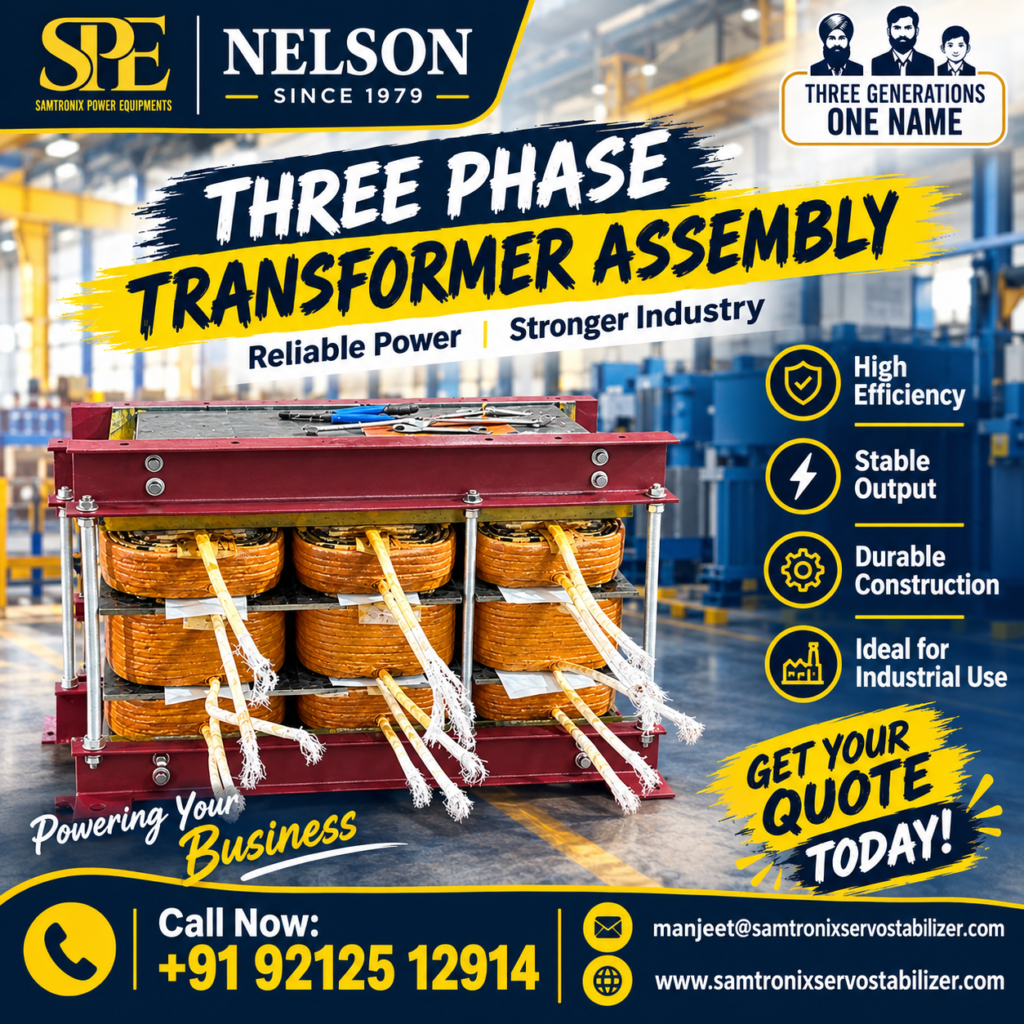
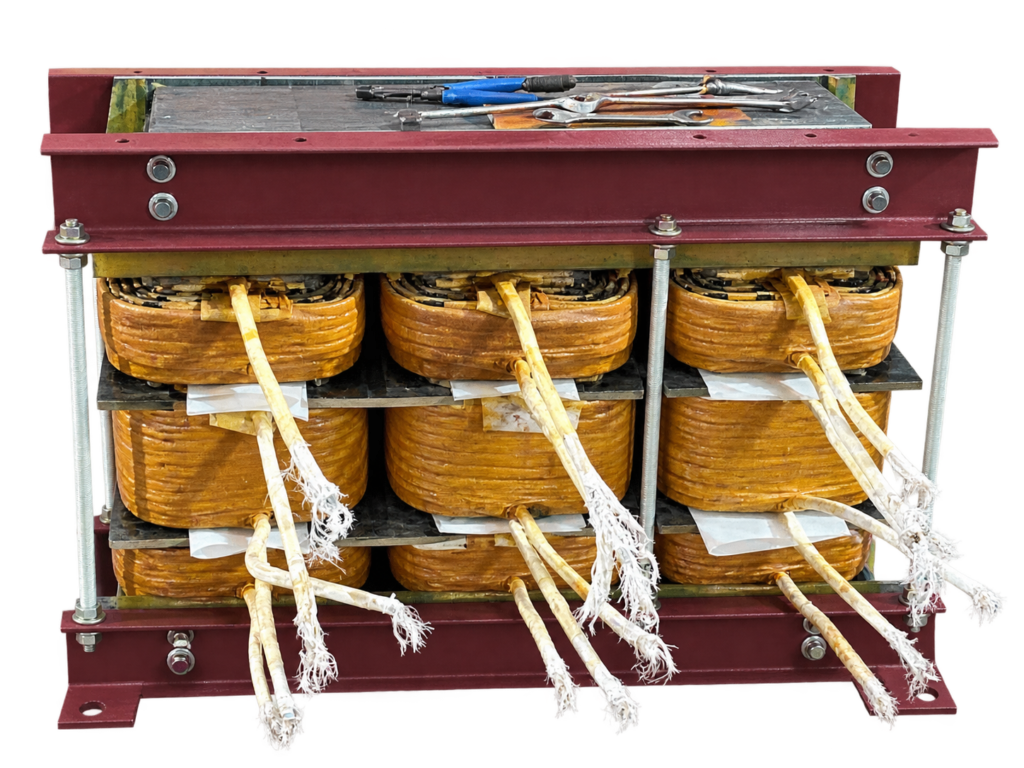
A three-phase transformer transfers electrical energy between circuits through electromagnetic induction. It consists of a magnetic core and windings arranged to work with a three-phase electrical supply. Depending on the application, the transformer can step voltage up or down while providing the required electrical isolation and power transfer characteristics.
A Three Phase Transformer Manufacturer in Delhi must consider several technical factors when designing a transformer for industrial use. These include the input voltage, required output voltage, rated capacity, frequency, insulation system, cooling arrangement and expected load conditions.
For example, a factory receiving power at one voltage level may need a transformer to supply machinery operating at another voltage level. The required transformer capacity depends on the combined electrical demand, starting conditions of the equipment and the possibility of future expansion.
The transformer should be selected according to the actual electrical requirements rather than the machine count alone. Two machines with similar physical sizes may have very different power demands.
Transformer Solutions for Industrial Applications
Samtronix Power Equipments serves industrial power requirements where dependable electrical equipment and correct capacity planning are important. As a Three Phase Transformer Manufacturer in Delhi, we understand that different industries have different operating conditions, load patterns and installation limitations.
Manufacturing units may require transformers for production lines, electrical distribution panels, industrial control systems and specialised machinery. Commercial facilities may need suitable transformer arrangements for electrical distribution across different sections of a building.
Heavy engineering plants can have equipment that operates continuously for several hours. In such environments, the transformer design should account for the expected load, heat generation, ambient temperature and available ventilation. Correct planning helps reduce avoidable electrical interruptions and supports consistent equipment operation.
A transformer is also used in applications where voltage conversion is required for machinery imported from another region or designed for a particular supply specification. In these situations, the input and output voltage requirements must be confirmed before selecting the equipment.
Important Technical Specifications
Before choosing a transformer, buyers should understand the specifications that influence its suitability. A Three Phase Transformer Manufacturer in Delhi can use these details to identify the appropriate electrical configuration for a particular installation.
| Technical parameter | Why it matters |
|---|---|
| Rated capacity in kVA | Indicates the transformer’s apparent power rating |
| Input voltage | Defines the voltage available at the primary winding |
| Output voltage | Determines the voltage supplied to the connected system |
| Frequency | Must match the intended electrical supply |
| Phase configuration | Confirms compatibility with the three-phase system |
| Cooling arrangement | Supports heat removal during operation |
| Insulation class | Relates to the thermal and electrical requirements of the winding insulation |
| Installation environment | Helps determine enclosure, ventilation and protection requirements |
For example, a transformer rated at 100 kVA does not automatically suit every factory requiring that nominal capacity. The connected load, power factor, operating duration and starting current must also be considered.
The design should provide adequate capacity for the expected demand while following applicable electrical and safety requirements. Samtronix Power Equipments can assess the information supplied by the customer to help identify the relevant transformer specifications.
How to Calculate the Required Transformer Capacity
Correct capacity planning helps avoid unnecessary electrical stress and operational problems. Industrial buyers should first prepare a list of connected equipment and collect the rated power details from each machine’s nameplate.
Suppose a production unit has several machines with a combined estimated demand of 60 kW. If the expected operating power factor is 0.85, the approximate apparent power requirement is:
Apparent power = Real power ÷ Power factor
60 kW ÷ 0.85 = approximately 70.6 kVA.
This calculation provides an initial estimate, not a final transformer selection. Starting currents, simultaneous operation, harmonics, environmental conditions and future expansion may change the required capacity.
A Three Phase Transformer Manufacturer in Delhi should evaluate these factors before confirming a suitable rating. If large motors start frequently, the starting demand may need special attention. Similarly, equipment that operates continuously in a hot industrial environment may require additional thermal consideration.
Customers should provide the machine list, supply voltage, required output voltage and operating schedule for a more appropriate technical assessment.
Applications Across Different Industries
Three-phase transformers are widely used in industrial and commercial environments. A Three Phase Transformer Manufacturer in Delhi helps businesses find suitable solutions based on electrical design and connected equipment requirements.
In manufacturing, transformers support production machinery, assembly lines, electrical panels and auxiliary systems. Metalworking units use them for cutting, forming and fabrication equipment, while plastic processing plants rely on them for machinery and heating systems.
Packaging facilities, printing units, commercial buildings, warehouses and industrial workshops may also require transformers for voltage conversion or dedicated power supply. Choosing a suitable Three Phase Transformer Manufacturer in Delhi helps businesses address their specific electrical requirements.
A Three Phase Transformer Manufacturer in Delhi must understand the intended application because the operating profile of a small workshop can differ significantly from that of a continuous-process manufacturing plant.
Transformer Requirements for Heavy Loads
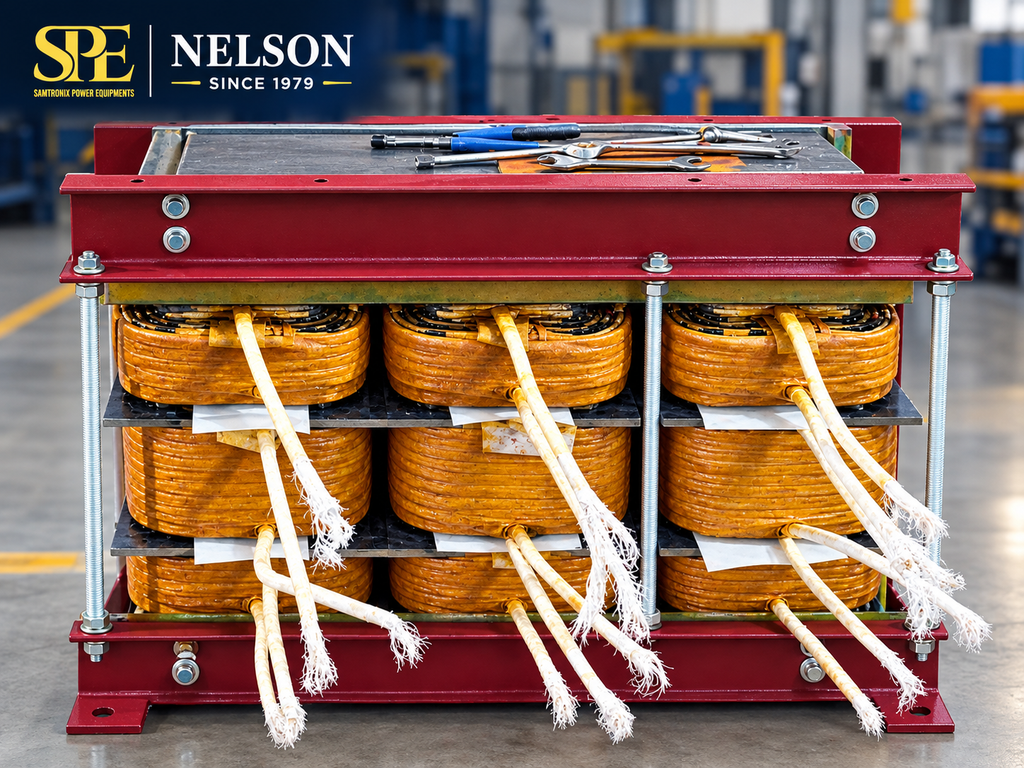
Heavy electrical loads require careful transformer selection. Motors, compressors, pumps, industrial ovens and large production machines place substantial demand on electrical systems. A Three Phase Transformer Manufacturer in Delhi can help assess capacity requirements for these heavy-duty applications.
Voltage drops during motor starting may affect connected equipment, while repeated overloading can increase winding temperature and damage insulation. Loose connections, undersized cables and poor ventilation can also cause problems. Therefore, transformer capacity must be assessed alongside distribution panels, protective devices, cable sizing and motor-starting requirements.
A Three Phase Transformer Manufacturer in Delhi should receive accurate information about the largest connected motor, its starting method, the frequency of starts and the number of machines operating simultaneously.
Where loads contain variable-frequency drives, rectifiers or other nonlinear equipment, harmonic levels may also need to be evaluated. These loads can increase heating and influence the required transformer design.
Proper installation, suitable protection and periodic inspection are important for maintaining reliable operation under demanding industrial conditions.
Transformer Assembly and Manufacturing Considerations
A transformer assembly contains several components that work together to meet specific electrical requirements. The magnetic core carries magnetic flux, while the primary and secondary windings transfer electrical energy. A Three Phase Transformer Manufacturer in Delhi considers these components when designing transformers for industrial applications.
Winding conductors, insulation materials, core arrangement, mechanical support and terminal connections all affect performance. The design must also manage heat dissipation and withstand mechanical forces during electrical faults. Choosing a reliable Three Phase Transformer Manufacturer in Delhi helps businesses identify transformer solutions suited to their operating requirements.
As a Three Phase Transformer Manufacturer in Delhi, Samtronix Power Equipments recognises the importance of matching the transformer construction to its operating requirements. The selection of winding materials and insulation arrangements should be based on the specified design, capacity and application.
Quality checks may include winding resistance measurements, insulation resistance testing, turns-ratio verification and other tests appropriate to the transformer type and applicable standards. The exact testing procedure depends on the design and project requirements.
Customers should confirm the required documentation, test reports, terminal arrangement and installation dimensions before dispatch and installation.
Three Phase Transformer and Servo Voltage Stabilizer Applications
Transformers and voltage stabilizers perform different functions in an electrical system. A transformer changes the voltage relationship between its input and output circuits, while a servo voltage stabilizer regulates output voltage to help compensate for variations in the incoming supply.
Some industrial facilities require both devices because voltage conversion and voltage regulation address different operating needs. The correct arrangement depends on the incoming supply, equipment specifications and the characteristics of the electrical load.
A servo voltage stabilizer may be considered where voltage fluctuations affect sensitive or valuable machinery. A 3 phase servo stabilizer is commonly used for compatible three-phase industrial loads, including production equipment and factory distribution systems.
A servo controlled voltage stabilizer can help maintain the required output voltage within its specified operating range. However, its capacity, correction range, response characteristics and overload capability must match the application.
For a servo stabilizer for industrial machines, buyers should provide the input voltage range, output voltage requirement, total load and motor-starting details. A servo stabilizer for CNC machine applications also requires attention to the machine manufacturer’s electrical specifications and sensitivity to supply disturbances.
The term industrial voltage stabilizer three phase generally refers to voltage-regulating equipment designed for compatible three-phase loads. An industrial three phase voltage stabilizer may be relevant for a voltage stabilizer for factory applications or a voltage stabilizer for heavy machinery, provided the equipment is correctly rated.
Oil cooled stabilizer for industrial loads is another relevant product term for installations where an oil-cooled stabilizer design is suitable. The cooling method must be selected according to the equipment design, load profile, environment and maintenance requirements.
Samtronix Power Equipments can help customers identify whether their requirement involves a transformer, a servo voltage stabilizer or a combination of equipment.
Transformer Selection for Manufacturing Units
Selecting a transformer for a manufacturing unit requires more than identifying the total connected load. Buyers should consider how the facility operates throughout the working day and whether electrical demand changes during different production stages.
A plant running several motors simultaneously may have different requirements from a facility where equipment operates in separate batches. A transformer used for a continuous production process should be assessed for the expected duration and loading pattern.
A Three Phase Transformer Manufacturer in Delhi can evaluate these operating details before recommending a design. The assessment should include the supply voltage, output requirements, available installation space, cooling conditions and electrical protection arrangements.
Future expansion is another important factor. If a factory plans to add new production lines within the next few years, the expected additional demand should be considered during the initial planning stage.
However, excessive oversizing is not a substitute for proper engineering. The transformer should be selected according to a realistic load assessment and the relevant technical requirements.
Installation, Safety and Maintenance
Correct installation is necessary for dependable transformer operation. The transformer should be positioned on a suitable foundation with sufficient access for inspection, cooling and maintenance. The installation area must meet the applicable electrical safety and environmental requirements.
Before energising the equipment, qualified personnel should verify the terminal connections, earthing arrangement, protective devices and compatibility with the connected electrical system.
Periodic inspection can help identify loose connections, unusual noise, overheating, insulation deterioration and other developing problems. The maintenance schedule should follow the manufacturer’s instructions and the operating conditions of the installation.
If the transformer experiences repeated tripping or unusual temperature increases, the cause should be investigated rather than simply resetting the protective device. Possible causes include overload, cooling problems, connection faults and abnormal supply conditions.
A Three Phase Transformer Manufacturer in Delhi should provide appropriate technical information so the customer can plan installation and maintenance correctly.
Why Choose Samtronix Power Equipments?
Industrial buyers need transformer equipment that is selected according to the actual requirements of their electrical system. Samtronix Power Equipments focuses on understanding the application, technical specifications and operating environment before discussing a suitable transformer solution.
As a Three Phase Transformer Manufacturer in Delhi, we support enquiries from factories, workshops, manufacturing units and commercial installations seeking transformer assemblies for their power distribution needs.
Customers can share their required kVA rating, input and output voltages, phase configuration, installation location and connected load details. If the existing transformer is experiencing overheating, repeated tripping or insufficient capacity, information about the operating problem can also help with the technical assessment.
For a new installation, buyers should provide the expected load and equipment details. For replacement projects, the existing nameplate information, terminal arrangement and installation dimensions can help establish the requirements.
Samtronix Power Equipments welcomes enquiries for industrial transformer requirements and related electrical power equipment. Contact our team to discuss your application and receive guidance based on the specifications of your installation.
Information to Share When Requesting a Transformer
Providing accurate technical information helps the supplier understand the requirement and prepare a suitable proposal. A Three Phase Transformer Manufacturer in Delhi can assess an enquiry more effectively when the customer supplies the essential electrical details.
| Information required | Example or detail |
|---|---|
| Required capacity | 25 kVA, 50 kVA, 100 kVA or another specified rating |
| Input voltage | Actual incoming supply voltage |
| Output voltage | Voltage required by the connected equipment |
| Application | Factory, CNC machine, production line or distribution panel |
| Load type | Motors, heaters, control equipment or mixed loads |
| Operating hours | Intermittent, single-shift or continuous operation |
| Installation conditions | Indoor, outdoor, ventilation and available space |
| Special requirements | Isolation, particular terminal arrangements or project-specific testing |
The examples above are for guidance only. The final specification should be based on the actual installation requirements.
If you are looking for a Three Phase Transformer Manufacturer in Delhi for an industrial project, Samtronix Power Equipments can review your requirements and help identify the technical information needed for the next step.
FAQs | Three Phase Transformer Manufacturer in Delhi
1. What information is needed to select a transformer for a factory?
Provide the connected load, input voltage, required output voltage, operating hours and details of major motors or other heavy loads.
2. Why does a transformer overheat even when the load seems normal?
Possible causes include poor ventilation, harmonics, loose connections, insulation problems or an incorrect load assessment. A qualified technician should investigate the cause.
3. Can a three-phase transformer supply CNC machines?
Yes, when the transformer’s voltage, capacity, electrical configuration and other specifications match the CNC machine’s requirements.
4. How can frequent motor-starting problems affect transformer selection?
High starting currents can create temporary voltage drops and additional electrical stress. The motor rating and starting method should be included in the load assessment.
5. Is a transformer the same as a servo voltage stabilizer?
No. A transformer changes voltage according to its winding configuration, while a servo voltage stabilizer regulates output voltage to compensate for input fluctuations within its specified range.
6. What should be checked before replacing an existing transformer?
Check the nameplate rating, input and output voltages, terminal connections, load demand, installation dimensions and protection arrangements.
7. What should I share when enquiring with Samtronix Power Equipments?
Share your required kVA rating, input and output voltages, application, load details and installation conditions so the team can assess your requirement.
Connect with Samtronix on LinkedIn for Industrial Power Expertise.