
Reliable Transformer Solutions for Industrial Electrical Systems
Industrial production depends on a stable and properly managed electrical supply. Manufacturing plants, processing units, workshops, and heavy engineering facilities use electrical equipment that needs the correct voltage and power capacity to operate efficiently. Selecting a suitable transformer is an important step because an unsuitable electrical arrangement can lead to overheating, unexpected shutdowns, and interruptions in production. As a Three Phase Transformer Manufacturer in Haryana, Samtronix Power Equipments focuses on industrial transformer requirements where dependable electrical performance and suitable equipment design matter.
A three-phase transformer is commonly used in facilities that operate motors, compressors, pumps, CNC machines, production lines, and other heavy loads. It transfers electrical energy between circuits through electromagnetic induction while changing voltage levels according to the system requirements. The correct transformer must be selected according to connected equipment, input supply, output voltage, operating conditions, and expected load.
Samtronix Power Equipments understands that industrial electrical requirements can differ from one factory to another. A small manufacturing workshop may operate several machines, while a large production facility may run motors and heavy machinery for extended periods. As a Three Phase Transformer Manufacturer in Haryana, our focus is on helping industrial buyers identify transformer requirements based on their applications and electrical operating conditions.
Understanding Three Phase Transformers in Industrial Applications
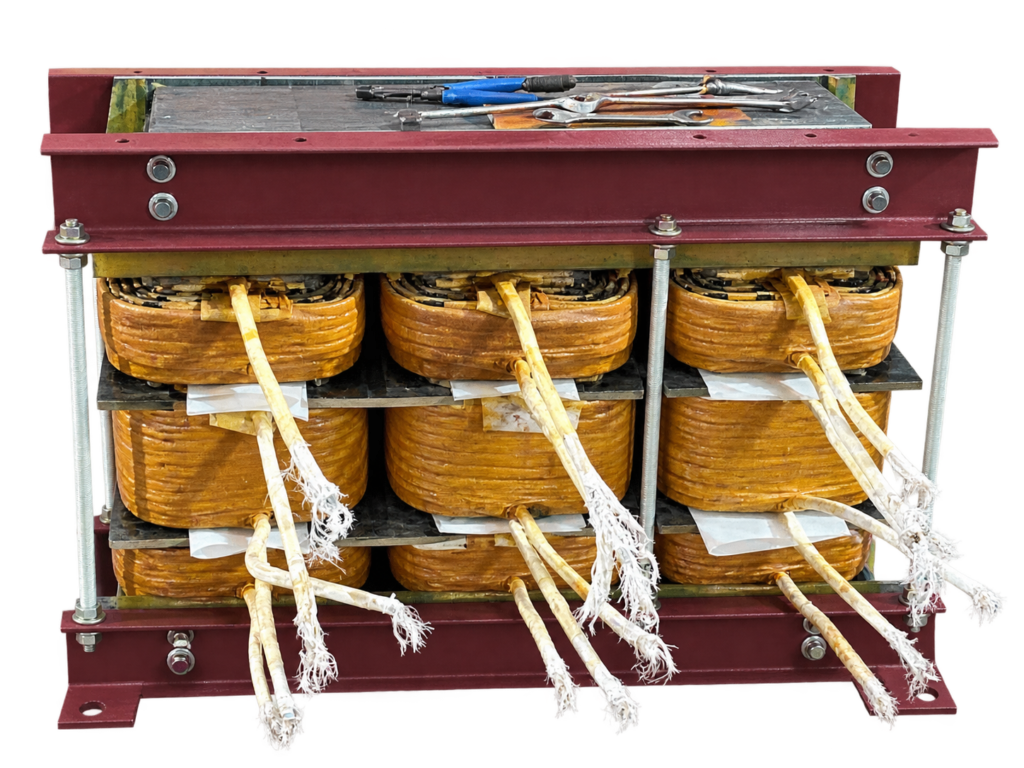
A Three Phase Transformer Manufacturer in Haryana provides transformers designed to work with three-phase electrical supplies for continuous industrial operations. These transformers consist of a magnetic core, primary and secondary windings, insulation, terminals, and a supporting structure. Their performance depends on the winding arrangement, insulation quality, cooling system, terminal connections, and operating conditions.
A Three Phase Transformer Manufacturer in Haryana needs to consider more than the connected load alone. The nature of the equipment, starting current, operating hours, surrounding temperature, and future production requirements can all influence the selection process. For example, a factory operating several motors may experience temporary current increases during motor starting. This condition needs to be considered when determining the required transformer capacity.
Why Transformer Selection Matters for Heavy Loads
Heavy loads place high demands on industrial electrical systems. Equipment such as hydraulic presses, air compressors, industrial pumps, large motors, and automated machinery can draw substantial current during operation and startup. Incorrect transformer selection may cause voltage drops and overheating.
For example, a manufacturing unit with a 60 kW load and a power factor of 0.85 requires approximately 70.6 kVA of apparent power. However, the final transformer rating must also account for motor starting currents, load variations, harmonics, ambient temperature, and future expansion.
A Three Phase Transformer Manufacturer in Haryana can help industrial buyers understand these requirements before the equipment is specified. Providing an accurate list of machines and their electrical ratings makes the selection process more practical. It also reduces the risk of choosing equipment that is undersized for the actual operating conditions.
For facilities with heavy loads, it is important to consider how frequently machines start and stop. A compressor that starts several times per hour may create different operating demands from a motor that runs continuously. The transformer should be selected for the real load profile instead of relying only on the total number of machines installed.
Types of Industrial Transformer Requirements
Different industrial applications require different transformer arrangements. The correct configuration depends on the voltage levels, load characteristics, installation environment, and purpose of the electrical system.
| Industrial requirement | Main consideration | Typical application |
|---|---|---|
| Voltage conversion | Required input and output voltage | Industrial distribution systems |
| Machine power supply | Machine-rated voltage and current | CNC machines and production equipment |
| Heavy-load operation | Starting current and continuous loading | Pumps, compressors, and motors |
| Electrical isolation | Isolation requirements and system design | Control panels and specialised equipment |
| Continuous industrial operation | Cooling, insulation, and operating temperature | Manufacturing facilities |
| Special-purpose transformer | Application-specific electrical parameters | Custom industrial installations |
As a Three Phase Transformer Manufacturer in Haryana, Samtronix Power Equipments recognises the importance of understanding the intended use before determining the transformer configuration. A transformer designed for voltage conversion may not fulfil every requirement of an isolation application. Similarly, the correct cooling arrangement depends on the transformer design, losses, loading conditions, and installation environment.
Industrial insulated transformer buyers should also confirm the required frequency, winding connections, enclosure or mounting arrangement, and applicable protection requirements. These details help establish whether the selected transformer is suitable for the intended installation.
Transformer Requirements for CNC Machines

CNC machines depend on an electrical supply that meets the machine manufacturer’s specified operating conditions. Voltage fluctuations, electrical disturbances, and an unsuitable supply arrangement can cause machine alarms, interrupted machining cycles, or unexpected shutdowns. The actual cause of a problem must be identified before selecting electrical correction equipment.
A Three Phase Transformer Manufacturer in Haryana can help assess transformer requirements for CNC installations by reviewing the machine’s rated input voltage, phase configuration, connected load, and electrical documentation. It is also useful to identify whether the CNC machine includes variable-frequency drives, servo drives, spindle motors, or other equipment that may influence the electrical load.
When the input supply fluctuates beyond the permitted range, a servo voltage stabilizer can regulate output voltage within its specified operating range. For CNC machines, a servo stabilizer should be selected based on voltage variations, load capacity, response requirements, and machine specifications. A servo voltage stabilizer manufacturer needs accurate details about the machine’s input supply and operating load to recommend suitable equipment.
Three Phase Transformers and Servo Voltage Stabilizers
Industrial insulated transformer buyers sometimes need both a transformer and voltage regulation equipment. These devices may be used together when the electrical installation requires voltage conversion as well as correction of supply fluctuations. Their selection should be based on a clear understanding of the problem affecting the machinery.
A servo controlled voltage stabilizer uses a control system to regulate output voltage. A 3 phase servo stabilizer is suitable for industrial equipment when the incoming supply fluctuates, depending on the input voltage range, required output, load characteristics, and capacity. A Three Phase Transformer Manufacturer in Haryana can help industrial buyers understand transformer requirements for their applications.
An industrial voltage stabilizer three phase system may be useful for factories operating multiple machines, motors, and electrical panels. An industrial three phase voltage stabilizer can also support heavy machinery that requires voltage correction under varying supply conditions.
Samtronix Power Equipments helps industrial buyers understand their electrical equipment requirements. When contacting servo stabilizer manufacturers, buyers should clarify whether they need voltage transformation, voltage regulation, electrical isolation, or a combination of these functions. A Three Phase Transformer Manufacturer in Haryana can assist buyers in identifying suitable transformer specifications for their industrial installations.
A servo insulated transformer manufacturer can help identify suitable regulation equipment based on the actual application. A transformer changes voltage according to its winding design, while a stabilizer corrects voltage fluctuations within its specified operating range.
Transformer Applications Across Haryana’s Industrial Sector
Haryana has a wide range of industrial activities, including automotive components, metalworking, engineering, packaging, food processing, plastics, and general manufacturing. Each industry has its own electrical requirements, depending on the machines installed and the production process.
A Three Phase Transformer Manufacturer in Haryana needs to understand these practical operating conditions. A packaging unit may use motors, sealing machines, and conveyors, while a metalworking facility may operate cutting equipment, compressors, and CNC machinery. These different loads can require different transformer ratings and installation arrangements.
Factories in Faridabad, Gurugram, Manesar, Panipat, and Sonipat may require transformer solutions for new installations, capacity expansion, or equipment replacement. A Three Phase Transformer Manufacturer in Haryana can help assess requirements based on the site’s electrical supply and operating conditions.
For voltage stabilizer for factory applications, buyers should check whether fluctuations affect the entire supply or a specific machine. This helps determine the appropriate location for voltage regulation.
A Three Phase Transformer Manufacturer in Haryana can also consider connected loads, installation space, ventilation, electrical connections, and operating schedules to help simplify equipment selection and installation planning.
Transformer Capacity and Electrical Load Planning
Transformer capacity is generally expressed in kilovolt-amperes (kVA). The required rating depends on apparent power rather than real power alone. Power factor, load diversity, starting current, harmonics, and expected future demand must be considered when calculating the capacity.
For a balanced three-phase system, apparent power can be calculated using line voltage and line current:
S (kVA) = √3 × Voltage (V) × Current (A) ÷ 1,000
For example, a balanced three-phase load operating at 415 V and drawing 100 A has an apparent power of approximately 71.9 kVA. This value describes the measured electrical demand under those conditions; it does not by itself establish the final transformer rating. The engineer must consider operating conditions and any additional capacity required by the application.
| Electrical parameter | Example value | Why it matters |
|---|---|---|
| Three-phase line voltage | 415 V | Helps establish the system voltage |
| Line current | 100 A | Indicates the current drawn under the stated condition |
| Calculated apparent power | 71.9 kVA | Provides a starting point for capacity assessment |
| Power factor | Application-dependent | Affects the relationship between kW and kVA |
| Motor starting current | Equipment-dependent | Can influence transformer selection |
| Future load growth | Site-dependent | Helps prevent insufficient capacity after expansion |
A Three Phase Transformer Manufacturer in Haryana should receive accurate load information before a final specification is prepared. Where several machines operate at the same time, the assessment should include their individual ratings and likely operating patterns.
The buyer should also consider whether additional production lines may be installed later. Planning for realistic future demand can prevent repeated changes to the electrical infrastructure. However, excessive oversizing should also be avoided unless justified by the engineering requirements.
Transformer Design, Insulation and Cooling
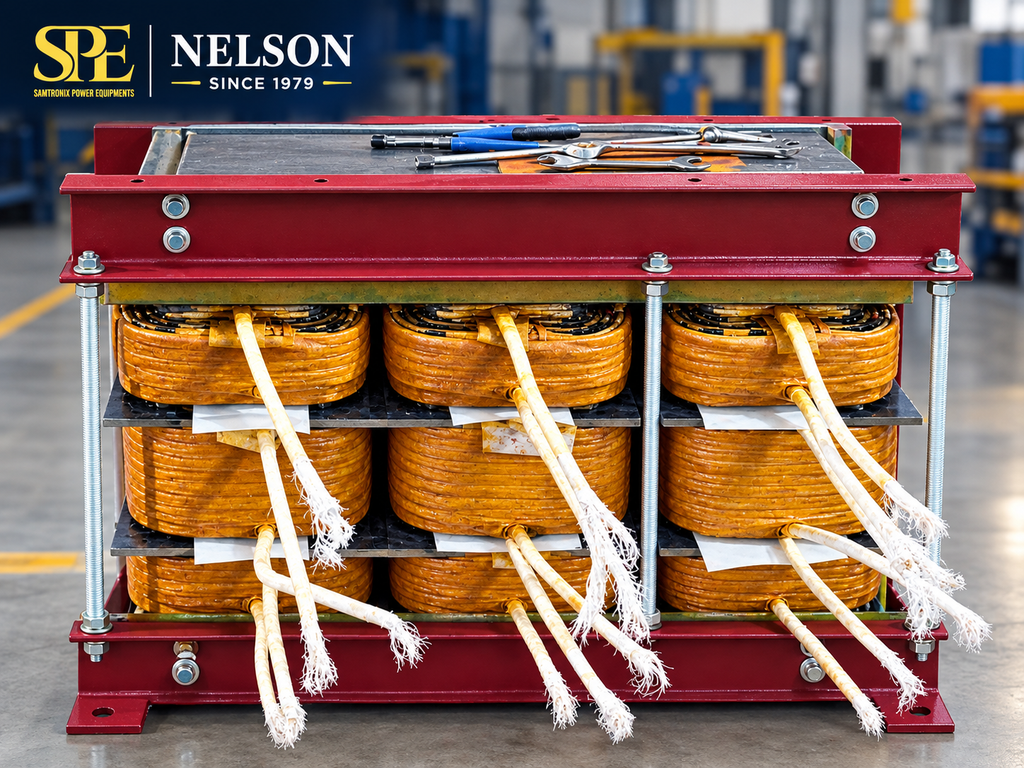
I nsulated transformer reliability depends on several construction and operating factors. The magnetic core, winding conductors, insulation materials, terminals, mechanical supports, and cooling arrangement must suit the rated electrical conditions. Poor connections, damaged insulation, restricted airflow, or sustained overloading can contribute to excessive temperature and equipment failure.
A Three Phase Transformer Manufacturer in Haryana should consider the environmental conditions where the transformer will be installed. A clean indoor electrical room may have different requirements from a dusty industrial workshop. High ambient temperatures and limited ventilation can affect heat dissipation, so the installation location needs to be reviewed.
Dry-type and oil-immersed transformer designs have different construction and maintenance requirements. A Three Phase Transformer Manufacturer in Haryana can help identify suitable options based on the application, installation environment, fire-safety provisions, maintenance needs, and relevant standards. Oil-immersed equipment also requires proper fluid management and regular inspections.
Where an installation uses an oil cooled stabilizer for industrial loads, the equipment must meet its own operating requirements. An oil-cooled stabilizer and an oil-immersed transformer serve different electrical functions and are not interchangeable.
Regular inspections should cover terminal tightness, abnormal noise, overheating, insulation condition, and cooling-system performance. A Three Phase Transformer Manufacturer in Haryana should consider the operating environment and manufacturer’s maintenance recommendations when assessing transformer requirements.
Choosing the Correct Transformer for Industrial Machines
Before contacting a Three Phase Transformer Manufacturer in Haryana, industrial buyers should collect a few important details. The available electrical information helps the manufacturer understand the application and identify the specifications that need further confirmation.
The first requirement is the input and output voltage. The buyer should also confirm whether the supply is three-phase, the operating frequency, the expected load in kW or kVA, and the rated current of the connected equipment. If motors or compressors are involved, their starting characteristics should be included wherever available.
The installation environment also matters. Available floor space, mounting requirements, ambient temperature, ventilation, dust exposure, and access for maintenance may influence the design. Electrical protection, earthing, cable sizing, and isolation requirements should be checked by a qualified electrical professional.
A voltage stabilizer for heavy machinery may be needed when incoming voltage fluctuations exceed the permitted range for the connected equipment. For a servo stabilizer for manufacturing industry applications, the operating load and voltage variation should be assessed together. A stabilizer selected only from the machine’s advertised power rating may not provide the required performance under real operating conditions.
Some buyers also search for 5 kva servo stabilizer options or terms such as 5kva price servo stabilizer. These search phrases indicate a particular product capacity or purchasing requirement, but a 5 kVA unit should only be considered where the actual load and starting demands fall within its specified limits. Large industrial machinery may require a substantially different capacity.
Similarly, searches for servo stabilizer manufacturers in Delhi or servo stabilizer manufacturers may reflect a requirement for voltage-regulation equipment rather than transformer manufacturing. Buyers should explain the electrical problem they need to solve so that the appropriate equipment can be identified.
Samtronix Power Equipments for Industrial Transformer Requirements
Samtronix Power Equipments works with industrial electrical equipment requirements where correct specifications, application suitability, and dependable operation are important. Businesses planning a new electrical installation or upgrading an existing manufacturing facility should begin by identifying their connected loads and required operating voltage.
As a Three Phase Transformer Manufacturer in Haryana, Samtronix Power Equipments aims to make the equipment selection process easier for industrial buyers by focusing on the practical details of their applications. Information about the machines, operating hours, supply conditions, and installation environment helps establish the technical requirements.
For buyers looking for a servo stabilizer for insulated transformer or industrial machines, the first step is to determine whether the problem involves voltage fluctuation, voltage conversion, or another electrical issue. If a CNC machine repeatedly displays input-voltage alarms, for example, recording the incoming voltage during the fault can help an electrical professional identify the cause. If a transformer overheats during peak production, its actual loading, ventilation, connections, and condition should be investigated rather than assuming that capacity alone is responsible.
Businesses can contact Samtronix Power Equipments with their application details to discuss suitable industrial electrical equipment. Clear technical information makes it easier to identify the appropriate equipment type and the specifications that need to be confirmed before installation.
FAQs | Three Phase Transformer Manufacturer in Haryana
1. How do I know if my factory transformer is overloaded?
Check the measured load, phase current, operating temperature, and transformer rating. A qualified electrician should assess sustained high loading and investigate repeated overheating.
2. Can a three-phase transformer operate CNC machines?
Yes, if its voltage, capacity, winding configuration, and electrical characteristics meet the CNC machine’s requirements.
3. Why does a transformer overheat during heavy production?
Possible causes include overloading, poor ventilation, loose connections, insulation problems, or unsuitable operating conditions. Inspection is required to identify the actual cause.
4. Do I need a transformer or a servo stabilizer?
A transformer changes voltage according to its winding design. A servo stabilizer regulates voltage fluctuations within its specified operating range. Some installations may require both.
5. What information is needed to select transformer capacity?
Provide the connected load, input and output voltage, phase, frequency, motor starting requirements, operating schedule, and expected future expansion.
6. Can one transformer supply several industrial machines?
Yes, if its capacity and electrical characteristics are suitable for the combined load, including simultaneous operation and motor starting demands.
7. What should I check before installing a new industrial transformer?
Confirm the electrical ratings, installation space, ventilation, earthing, protection arrangements, cable sizing, and applicable safety requirements with a qualified professional.
Connect with Samtronix on LinkedIn for Industrial Power Expertise.